Before the First Pint: What the Table Water Jug Really Tells You
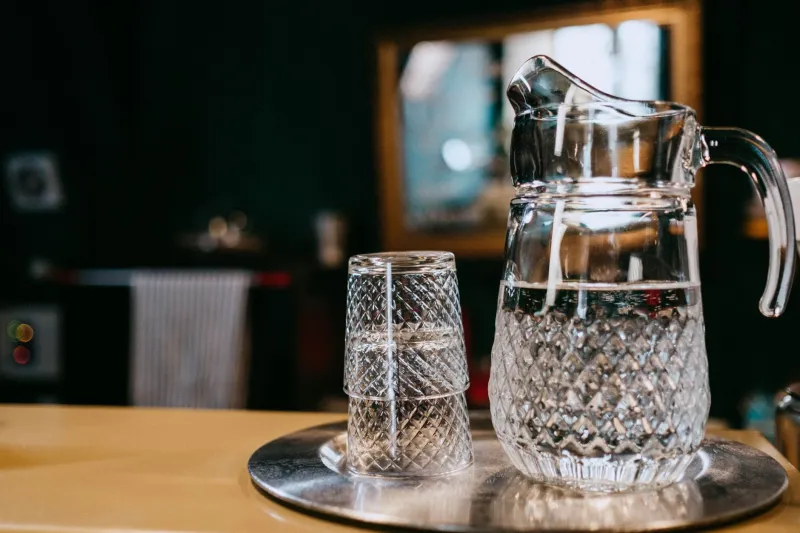
There is a moment, usually just after you sit down, when a pub shows you what it is really like. It is not the greeting at the door, though that helps. It is not the sight of a well-kept bar, though that matters too. It is the water jug. Or, more accurately, what arrives — or fails to arrive — when you ask for one.
At The Glen Tavern, we have spent a fair bit of 2026 thinking about the small stuff. The things that do not make it onto Instagram but do make or break a lunch. And the table water jug might be the most underrated of the lot. It is cheap to get right and strangely revealing when it goes wrong.
The case for the unglamorous jug
Nobody goes to the pub for the water. That is the point. It is a supporting act, and supporting acts tell you how seriously the whole production is being taken. A jug that arrives with cloudy glasses, a warm top-up and no ice is not a disaster. But it is a signal. It suggests a kitchen or a front-of-house team that is busy looking at the bigger picture and missing the frame.
Conversely, a jug that turns up cold, with clean glassware, a couple of lemon slices and perhaps a few ice cubes that have not welded themselves into a block is a small, wordless promise. It says: someone noticed. Someone thought about the table before you did. That is hospitality in its plainest form.
What cloudy glasses actually mean
Let us be clear: cloudy glassware is not always a hygiene crisis. In hard-water areas — and plenty of Britain is hard-water country — a bit of cloudiness can come from the wash itself. But that is precisely the point. A pub that knows its water is hard and still sends out glasses that look like they have been rinsed in a chalk quarry is telling you something about attention to detail. Rinse aids, proper drying, a decent glasswasher and a quick polish are not glamorous investments. They are just the basics.
When a jug arrives with four cloudy tumblers, we do not assume the worst. We assume the kitchen has bigger things on its mind. Sometimes that is fair enough. But if the roast is also a bit tired and the gravy has clearly been holding since noon, the water jug starts to look less like a coincidence and more like a preview.
Warm taps and the ice question
There is a special disappointment reserved for the pub water jug that arrives at room temperature on a warm day. It is not illegal. It is not even unusual. But it is a missed opportunity. Ice is cheap, and a jug with a few cubes in it feels like a small act of care. A jug without ice feels like a shrug.
The same goes for the top-up. A good pub notices an empty jug. A great pub notices it before you have to ask. This is not about staff hovering. It is about the quiet rhythm of a table: glasses emptied, plates cleared, jug refilled. When that rhythm is off, you feel it. When it is on, you barely notice — which is exactly the point.
Lemon, lime and the limits of garnish
We are not demanding a fruit salad. A slice of lemon is nice. A sprig of mint is showing off. But there is a line between thoughtful and performative. A jug overloaded with garnish but served with warm water and no ice is a bit like a pub with a beautiful chalkboard and a microwave for a kitchen. It looks good for a second. Then you actually use it.
The real test is simpler: is the water cold, is the glass clean, and did anyone think about it before you asked? If the answer to all three is yes, the kitchen is probably in decent shape. If the answer is no, order the pie and keep your expectations modest.
Why this matters more than the slogan
Pubs love a slogan. "Fresh, local, seasonal" looks lovely on a chalkboard. "Proper Sunday roast" has sold a lot of beef over the years. But slogans are marketing. The water jug is evidence. It is the unedited version of a pub's standards, sitting right there on the table before the first pint is pulled.
At The Glen Tavern, we are not saying a pub with a perfect water jug is automatically serving Michelin-starred food. We are saying the opposite: a pub that cannot be bothered to chill a jug of tap water is probably not going to surprise you with the crab croquettes. Standards tend to travel together. Care is rarely confined to one plate.
So next time you sit down, take a look at the jug. It will not tell you everything. But it will tell you something — and it is usually worth listening to.