A Bowl of Confidence: What Britain's Pub Soup Boards Say in 2026
The soup of the day is the quietest line on the pub menu. It sits under the pie, beside the fish and chips, written in the same chalk as everything else but somehow asking for less attention. That is the mistake. At The Glen Tavern, we have spent enough winters watching bowls arrive at neighbouring tables to know that soup is not the safe option. It is the honest one.
A pub can hide a lot behind a Sunday roast. It can disguise a tired kitchen with a good gravy boat, or a lack of ambition with a huge plate of chips. Soup does not allow that. It is a small, cheap, fast-moving dish that reveals what the kitchen actually does with vegetables, stock, bread and time. In 2026, with pub menus under more pressure than ever to justify every line, the soup board has become the most revealing document in the building.
The board is a kitchen's handshake
Walk into a pub in November and look at the soup first. Not the specials board, not the pie list, not the chalk drawing of a pig with a knife and fork. The soup. It tells you whether someone in the kitchen is actually cooking or simply assembling.
A changing daily soup is a good sign, but not for the reason people think. It does not have to be wildly original. It just has to respond to what is available. Leek and potato in January, celeriac in February, wild garlic in April, tomato in August. That rhythm is a form of confidence. It says the kitchen is paying attention to the season and to the wholesaler, rather than defrosting the same tub of something orange every morning.
The opposite is also true. A pub that offers the same three soups on rotation for months is not necessarily bad. It might be efficient. But if the flavour list reads like a catalogue of sauces, you can make a fair guess about where the soup came from. Broccoli and stilton is a classic. Cream of mushroom is a classic. Tomato and basil is a classic. None of them are crimes. But a board that never changes in a year of British weather is not a board that is listening.
Four tells before the first spoon
You do not need to order the soup to read it. Four things give the game away.
The first is the flavour. Seasonal vegetables, pulses and proper stock are a better sign than a list of luxury ingredients. A ham hock and split pea soup is not fancy. It is work. It means someone cooked a ham, kept the liquor, soaked the peas and built a bowl with depth. A celeriac and hazelnut soup is not fancy either, but it shows a kitchen willing to roast and blend and season rather than open a carton.
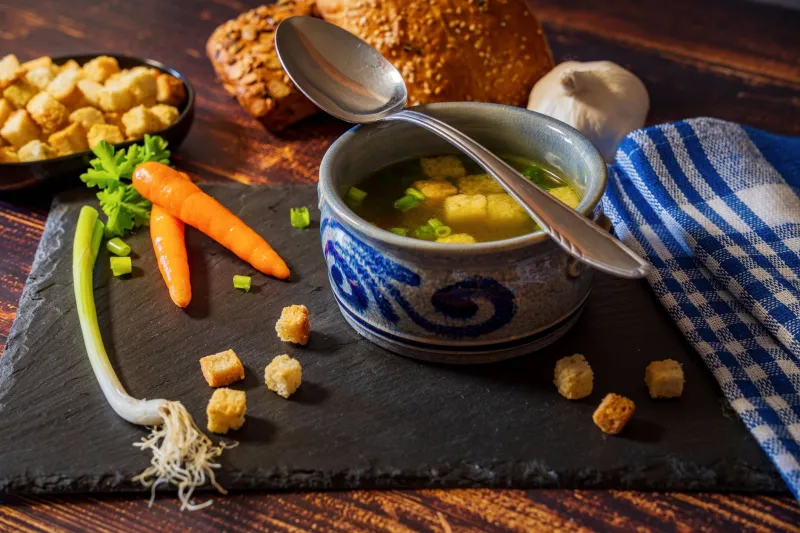
The second is the bread. This is where many pubs lose the argument. Soup without good bread is a bath without water. A doorstep slice of white, lightly toasted and properly buttered, can carry a modest bowl. A stale baguette cut into thin rounds cannot. If the bread is made in-house, or sourced from a local bakery, the board usually says so. If it does not say so, look at what arrives. Bread is the cheapest test of a kitchen's self-respect.
The third is the garnish. A swirl of cream is fine. A slick of good olive oil is better. Toasted seeds, crispy onions, a few herbs, a spoon of mustard cream or a scatter of crunchy salt all suggest someone tasted the bowl before it left the pass. A lonely parsley leaf on an otherwise naked soup is a shrug.
The fourth is the price. In 2026, a small pub soup should sit somewhere between £5 and £7. A main-course bowl with good bread can reasonably reach £8 or £9. Anything above that needs to be exceptional. Anything below £5 is either a loss leader or a warning. Neither is automatically bad, but you should know which one you are ordering.
What good looks like
I am not going to name names, partly because pubs change hands and kitchens change staff, and partly because the best soup boards are often in places that would rather not be on a list. But there are patterns worth recognising.
A pub on the edge of the Peak District, all flagged floors and wet coats, once served a ham hock and split pea soup with mustard croutons. It was £7.50, came with a thick slice of sourdough and a small dish of salted butter, and it justified a second pint before the first was finished. That is the gold standard. The soup was not trying to be a meal. It was trying to be a good bowl, and it succeeded.
A Norfolk pub with a small dining room and a big garden served celeriac, hazelnut and brown butter soup in February. The garnish was toasted hazelnuts and a little chopped thyme. The bread was from a bakery two miles away. The soup cost £6.50 and tasted like the vegetable had been roasted that morning. Nobody was surprised to see the kitchen later carrying a tray of them to the bar.
A Glasgow pub got it right with lentil and bacon. No cream, no fuss, just a properly seasoned bowl with a wedge of buttered white bread. It was the sort of soup that made you want to stay for another half and a chat. That is not a small thing. Soup is often the first thing a kitchen sends out and the last thing a pub is judged on. It should feel like hospitality, not a holding pattern.
The second-pint ranking
A light ranking, then, of soups that actually justify ordering another pint. This is not a league table of flavour. It is a list of bowls that make you want to sit down properly.
-
Ham hock and split pea. Salty, deep, faintly sweet from the peas, and built for beer. A good one with mustard croutons and thick bread is the best argument for a second pint on a cold Tuesday.
-
Celeriac, hazelnut and brown butter. Earthy, nutty and clever without showing off. It pairs well with a bitter and makes a winter lunch feel like a decision rather than a stopgap.
-
Leek and potato with a cheese scone. The soup is simple. The scone is the tell. If the scone is warm and savoury, the kitchen cares. If it is a cold rock, order the pie.
-
Spiced parsnip with honey. Sweet, warm and slightly dangerous. A good one tastes of the vegetable, not of the spice rack. A bad one tastes like a candle shop.
-
Tomato and basil. Only in August, only with good bread, and only if the kitchen has resisted the urge to add cream. Out of season, it is usually a sauce pretending to be a soup. In season, it is one of the best things a pub can serve.
The winter maths
Soup is not just a bowl. It is a price-point decision. In 2026, pubs are balancing energy bills, staff costs and the price of a pint. Soup is one of the few dishes that can still feel like good value without being cheap. A £7 bowl with proper bread and a £5.50 pint is a £12.50 lunch. That is not nothing. But if the soup is good, it is money well spent.
The trick for the reader is simple. Ask what is in it. Ask if the bread is local. Ask if the bowl is available as a main with a sandwich or a pudding. A pub that answers those questions cheerfully is usually a pub that knows what it is doing. A pub that shrugs is telling you something too.
And if the soup arrives lukewarm, send it back. Politely, but send it back. Soup is not a dish that improves with apology.
The last spoon
The soup of the day will never be the headline act. It does not need to be. It is the line that tells you whether the kitchen is awake, whether the bread is worth eating and whether the pub is thinking about the season or just the freezer. In 2026, that is worth more than a fancy specials board. Order the soup. Read the board. Then order the second pint.