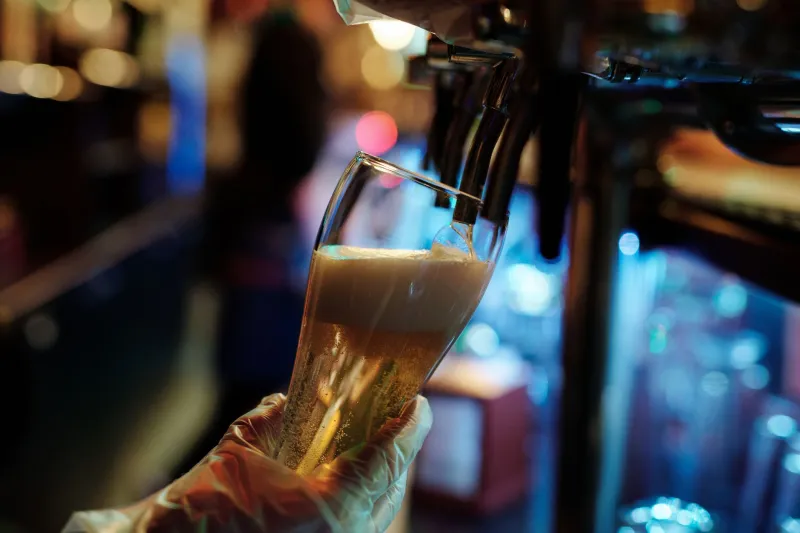
Small Measures, Big Business: How the Half-Pint Became the Pub Trade's Quiet Winner in 2026
Photo: James St. John, CC BY 2.0, via Wikimedia Commons
The glass that stopped apologising
For years, asking for a half in a British pub could earn you a look. Not quite suspicion, not quite pity — something in between. The half was what you ordered if you were driving, pacing yourself, or trying to look responsible in front of your mother. In 2026, that has changed. The half is now a listed serve, a tasting option, a lower-alcohol choice and, in plenty of pubs, a deliberate part of the offer rather than a favour behind the bar.
The shift is not loud. You will not see many pubs rebranding themselves as half-pint destinations. But talk to landlords and brewers and the same point comes up: drinkers want range without the commitment of a full pint. A half lets someone try the 6% stout, the new cask pale, or the sour they would never risk a whole glass on. It also lets them have a second drink and still get the bus home.
What landlords are actually pouring
The half is no longer just a smaller version of the same brown bitter. Brewers have spent the past few years improving lower-alcohol beer, and drinkers have noticed. A 2.8% pale or a 3.2% table beer is no longer a consolation prize; in the right hands it is a proper pint, just a gentler one. The half suits that style. You can have two halves of different beers, compare them, and still feel like you have had a pub session rather than a tasting seminar.
Tasting flights have helped. Pubs that would never have sold three separate thirds now offer a board of halves or thirds, sometimes with tasting notes, sometimes just chalked on a blackboard. It is a small theatre, but it works. The half is a low-risk way to trade up: instead of one pint of the usual, a drinker might have a half of something special and a half of something sensible.
The economics of a smaller glass
Here is where it gets interesting. A half often costs more than half the price of a pint — usually somewhere around 55% to 60%, sometimes more. That can look like a rip-off if you are doing the maths at the bar. But the landlord’s maths is different. A half is more work: more glass washing, more till transactions, more staff time, more chance of a wobbly pour. It also reduces waste on cask, where a barrel has a limited life once tapped. Smaller serves can mean fresher beer and less tipping away.
The danger is obvious. If a half is priced like a penalty, regulars will notice. Nobody wants to feel like they are being charged a premium for drinking less. The pubs getting it right are the ones that price halves fairly, list them clearly, and do not make a half feel like a request for a child’s portion. A half should be a legitimate choice, not a tax on moderation.
The health argument, without the lecture
There is a health story here, but pubs should be careful with it. The half is not a wellness product and a pub is not a clinic. Still, smaller measures and lower-strength beers give people more control over a session. They can have a drink with lunch and still work in the afternoon. They can join a round without matching every pint. They can try the strong stuff without falling into it.
That matters for groups. One person wants a pint of bitter, another wants a half of low-alcohol pale, a third is driving and wants a soft drink. The pub that caters for all three is more likely to get the whole table through the door. The half is part of that flexibility.
The regulars’ verdict
Not everyone is convinced. Some regulars see halves as a sign of a pub trying to have it both ways: charging more per litre while claiming to be customer-friendly. Others simply like a pint and do not want to be told that a smaller glass is the future. Fair enough. The half is not replacing the pint, and it should not try to.
The strongest argument for the half is not that it is healthier or cheaper or trendier. It is that it lets people drink the way they actually want to: a bit of this, a bit of that, a little less, a little slower. The pub trade has spent years talking about experience. A proper half is a small experience, served cold and priced honestly.
Is it a fad?
Probably not. Tasting culture is now part of how people drink, lower-alcohol beer has got better, and pubs need every reason they can find to get people through the door. The half fits all three. It is not a silver bullet, and it will not save a pub with bad beer and worse service. But as a margin move, it is smarter than it looks: it encourages trial, supports food, and keeps the session going without pushing everyone towards a taxi.
The half-pint renaissance will last as long as pubs treat the half as a first-class serve. Proper glass, proper pour, fair price, staff who know what is in it. Do that, and the smallest measure on the bar becomes one of the most useful tools in the trade. Neglect it, and it becomes a novelty — another thing pubs tried once and put back on the shelf.