The Sunday Roast vs the Oven at Home: Doing the 2026 Maths on Britain's Favourite Lunch
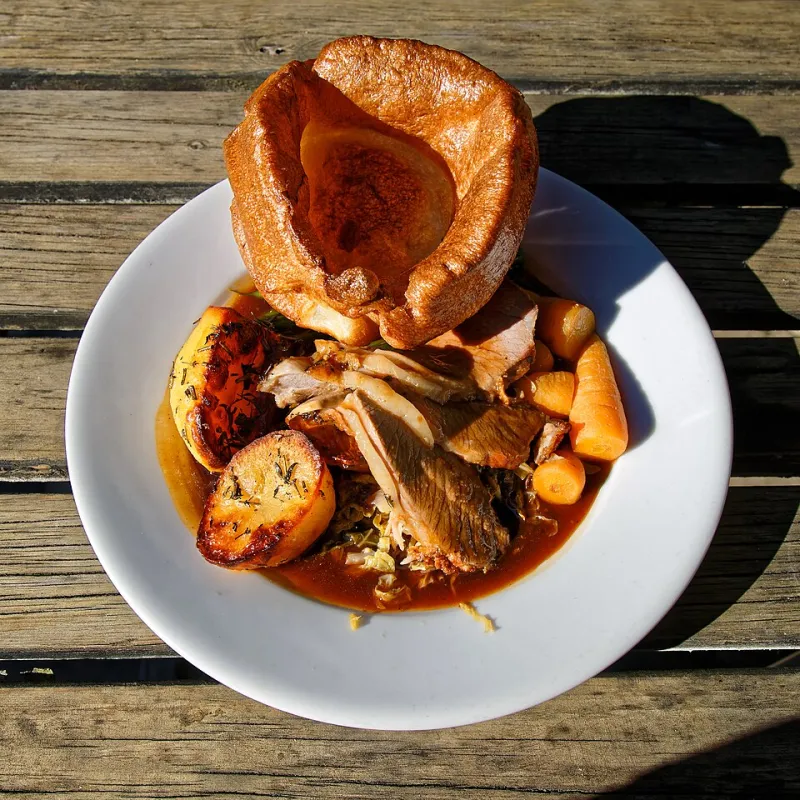
Photo: Acabashi, CC BY-SA 4.0, via Wikimedia Commons
Every few months, someone on the internet does the arithmetic on a pub Sunday roast and concludes that it costs roughly eleven pence to make at home. The sums are always technically correct and completely miss the point. So this November we did the maths properly — our roast, our kitchen, our energy bill — and then we went and asked the people eating it what they thought.
The claim we're testing
The argument goes like this: a joint of meat, a bag of potatoes, some carrots and a packet of Yorkshire pudding batter cannot possibly add up to eighteen pounds a head. Therefore the pub is profiteering. Therefore you should stay in.
It's a fair challenge, and it deserves a fair answer rather than a shrug about overheads. So let's actually count.
What a roast costs at home in 2026
Take a family of four doing beef. A 1.5kg topside is somewhere between £23 and £28 depending on where you shop and how good the beef is. Potatoes, carrots, parsnips, greens and an onion: £5–£7. Milk, butter, flour and eggs for Yorkshire puddings: £2. Gravy from the roasting tin, plus a splash of wine or ale: £1.50. A spoon of goose fat or oil: £1.
Then there's the oven. A fan oven pulling around 2.5kW for the best part of three hours, at current electricity prices, is roughly £1.80–£2.20 before you've boiled anything or heated the plates. Add the hob and you're comfortably past £2.50.
Total for four: about £35–£45, and that's before you've bought a drink, a pudding, or the washing-up liquid.
What it costs at The Glen
Our Sunday roast is £18.95. For four people that's £75.80, and with a round of drinks you're looking at £95–£110. On the cold numbers, the pub is roughly two-and-a-half times the price of doing it yourself.
That gap is real, and it hasn't shrunk. Meat prices have been stubborn, but so has everything else, and a pub kitchen buys its beef by the case rather than the joint. Nobody here is pretending the pub is the cheaper option. It isn't.
The bit the spreadsheet misses
The home calculation assumes your time is free. Three hours of cooking, plus the shop, plus the washing-up, plus the fact that somebody has to carve while everyone else is already sitting down. If you value that at even a tenner an hour, the gap narrows to something that looks a lot less scandalous.
It also assumes you can cook it well. A decent pub roast has a trained kitchen timing six joints, keeping Yorkshire puddings warm, and getting gravy to the table before it skins over. That's not sorcery, but it is labour, and labour is what you're buying.
What the diners told us
We asked a few people at the tables last Sunday, and the answers split neatly by circumstance rather than by income.
A retired couple from the next village said they come most weeks: "We worked out it's about the same as us buying the meat and putting the oven on, once you add the wine. And I don't have to do the dishes."
A nurse on a rare weekend off was less sure: "I love it, but with two kids it's a birthday thing now, not a Sunday thing. We do chicken at home and it's fine."
A student who'd come in for the cheap seats at the bar put it bluntly: "It's the one proper meal I have all week. I'd rather spend it here than on three takeaways."
That's the pattern: for some households the pub roast has become the reliable weekly anchor, for others it's moved into the special-occasion bracket — the same shelf as a birthday meal or a match-day treat.
The leftovers argument
The home cooks have one genuine advantage: leftovers. A big joint gives you Monday sandwiches and a Tuesday pie, and that's a real saving the pub can't match. If you're feeding a family across three days, cooking at home wins the maths outright.
But leftovers are only free if you actually eat them. The amount of cold beef that quietly dies in a fridge every week in this country is a national scandal, and it never appears in the spreadsheet.
So is it still the best value meal in Britain?
Not if "value" means cheapest per calorie. On that measure, the pub loses, and it will keep losing. The Sunday roast at home is a genuine bargain if you have the time, the oven and the appetite for the washing-up.
But value isn't only cost. A pub roast buys you a table, a pint, someone else's cooking, and two hours where nobody has to get up. For a lot of people — especially anyone living alone, or anyone whose week is spent cooking for other people — that's worth more than the difference. It remains the most reliable social meal in the country: you know what you're getting, you know roughly what it costs, and it works for a first date, a family ceasefire or a hangover.
What's changed is that it's no longer the default. In 2026 the pub roast sits somewhere between habit and treat, and which one it is depends entirely on your kitchen, your family and your Sunday. That's not a decline. It's just a meal finding its proper place.
The Glen's verdict
We'd rather be honest than defensive. If you can cook a good roast at home, do it — and come in when you want the company. If you can't, or you'd rather not spend the afternoon in front of an oven, £18.95 is a fair price for lunch, a seat by the fire and no washing-up. Book ahead for December; the spreadsheet can wait.