Bread, Cheese and Consequences: The Ploughman's Gets Its Reckoning in 2026
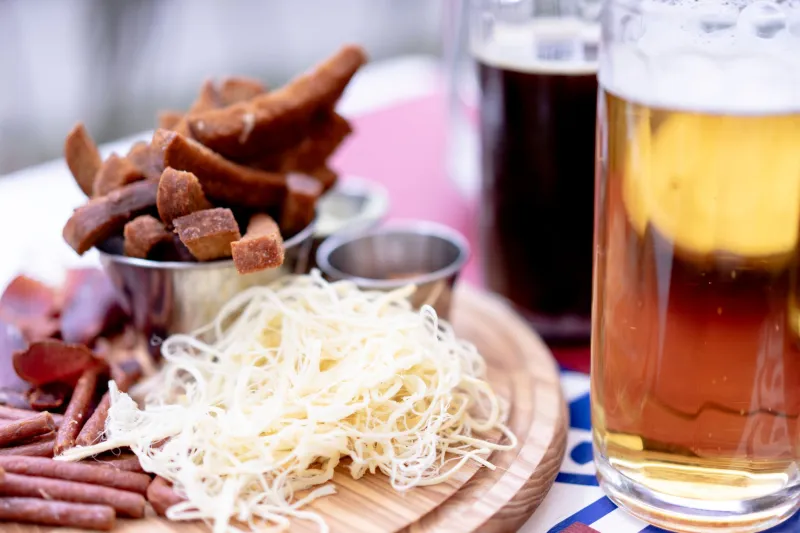
There is a particular kind of silence that falls over a pub table when a ploughman's lands. Not disappointment, exactly. More like reappraisal. The plate arrives, everyone leans in, and somebody says: "That's actually quite a lot, isn't it?" It is. And that, in 2026, is precisely the point.
The ploughman's has never really gone away, but it has spent a long time being underestimated. It is the dish pubs fall back on when the kitchen is stretched, the dish customers order when they want something that won't require a nap afterwards, and the dish that — more often than anyone would like to admit — gets assembled rather than made. A wedge of cheddar, a heap of undressed leaves, a packet chutney, two slices of bread that have seen better days. Job done. Next order, please.
But something is shifting. As pub kitchens tighten their menus and drinkers grow more curious about what is actually on the plate, the ploughman's is starting to look less like a compromise and more like a statement. It is, when done properly, the most honest thing a pub can serve you.
The cold plate that tells the truth
A burger can hide behind a brioche bun. A pie can lean on gravy. A ploughman's cannot. It is a collection of separate, unmasked ingredients, and every one of them has to pull its weight. The cheese is either good or it isn't. The pickle is either sharp and lively or sweet and dead. The bread is either fresh enough to bother with or it is wallpaper. There is nowhere to hide a shortcut.
That is why the dish is such a useful test of a kitchen. If a pub cares about its ploughman's, it cares about sourcing, storage and seasoning — the unglamorous stuff. If it doesn't, you will know within thirty seconds. The cheddar will be fridge-cold and slightly sweaty. The pickle will come in a tiny plastic ramekin with a foil lid. The salad will be a handful of rocket doing its best impression of a garnish. And the whole thing will feel like a decision someone made in a hurry on a Tuesday.
In 2026, with pub food costs still under pressure and customers more switched on about provenance than ever, the ploughman's is a chance for a kitchen to show its working. A good one says: we know what we're doing, and we're not going to dress it up.
What actually belongs on the plate
There is no single correct ploughman's, which is part of its charm. But there are principles. The cheese should be room temperature, or close to it. Cold mutes flavour, and a ploughman's is nothing if not a flavour-first plate. A proper chunk of mature cheddar is the classic, but regional alternatives — a crumbly Lancashire, a sharp Lincolnshire Poacher, a bit of Stinking Bishop if the pub is feeling brave — all earn their place. Variety helps: two cheeses, one hard and one soft, is never a bad idea.
The pickle matters more than people think. Branston is a national treasure and nobody needs to apologise for it, but a good pub chutney or a properly sharp pickled onion can lift the whole plate. The bread should be cut thick enough to be useful, buttered with conviction, and fresh enough that you'd be happy to eat it on its own. Add a pork pie if the pub is serious about it, a hard-boiled egg if it isn't, and a bit of apple or celery for crunch. Salad is fine, as long as it is dressed and not just present.
What pubs get wrong, mostly, is quantity over care. A mountain of cheap ingredients is not a ploughman's; it's a buffet that has given up. The best versions are generous but edited. They look like someone thought about them.
The pint that belongs beside it
Here is where the ploughman's quietly becomes a beer question. The plate is salty, sharp, rich and savoury, and it needs something with enough character to cut through without bulldozing it. A best bitter is the obvious answer, and often the right one — something with a bit of biscuit and a clean, bitter finish. A brown ale works well with the richer cheeses. If the pub has a proper dry cider on, that is a fine shout too, particularly with a chunk of mature cheddar.
What you don't want is anything too cold, too fizzy or too thin. A ploughman's is a slow plate. It wants a pint you can take your time over, not one that disappears in three mouthfuls. That is part of the appeal. It is a lunch that rewards sitting still.
Why it matters in 2026
We are living through a period when pub menus are being trimmed and every dish has to justify its place. The ploughman's justifies its place by being simple, adaptable and — crucially — inexpensive to do well if the pub cares. It doesn't need a chef with a blowtorch. It needs good ingredients, a bit of assembly and a kitchen that isn't cutting corners.
It is also, quietly, a very British thing to order. It suits a pub garden in July and a fireside table in January. It works with a pint, a cider or a glass of something white. It is the rare dish that feels both modest and generous.
So next time you see it on the menu, don't skip past it on the way to the burger. Order it. Look at the cheese. Taste the pickle. See what the kitchen is telling you. A ploughman's is never just a ploughman's. It is a pub's whole approach to food, served cold on a plate.