The Egg at the End of the Bar: Reading a Pub by Its Pickled Egg Jar
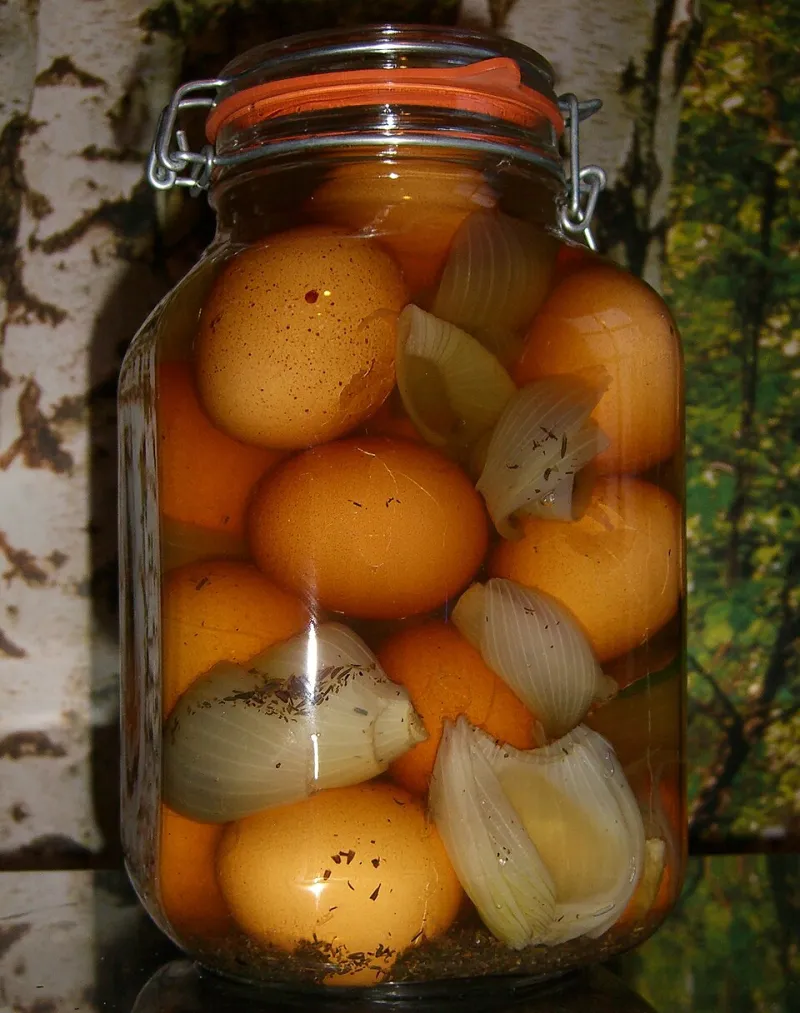
Photo: Doktor Zion, CC0, via Wikimedia Commons
There is a certain kind of pub where the first thing you clock after the hand pumps is not the menu, not the fire, not even the dog asleep under the window bench. It is the jar. A big glass cylinder, slightly foggy at the shoulders, sitting somewhere between the till and the spirit shelf like it has been there since the wall was papered. Inside: eggs. Pale, vinegary, faintly ominous. And, if the pub knows what it is doing, a jar that is not quite full.
In 2026, the pickled egg has become an unexpectedly useful barometer. Not because it is fashionable — it is not — but because it is honest. A jar of pickled eggs cannot pretend. It either belongs there or it does not. And the way a pub handles that jar says plenty about the kitchen behind the wall, the instincts of the person in charge and the sort of pint you are quietly being pointed towards.
The geography of the jar
Where the jar sits is the first clue. On the bar counter, within easy reach of the till and ideally beside a small stack of napkins that look like they were bought in 1998, it reads as a working object. It is there to be bought, eaten and replenished. A jar at the end of the bar, near the door, suggests a pub that still expects a certain kind of passing trade: walkers, smokers, bloke-with-a-dog-who-has-done-this-before.
A jar behind the bar, on the back shelf next to the dusty fruit liqueurs, is more ambivalent. It exists, technically. You can order one. But you get the sense nobody has asked since the last bank holiday. A jar in a fridge, on the other hand, is usually a sign of good sense. Pickled eggs are better cold and firm than warm and rubbery, and a pub that keeps them chilled knows what it is doing.
The most telling position of all, though, is the one next to a bowl of pork scratchings and a jar of pickled onions. That little trio — egg, onion, scratchings — is a self-contained bar snack economy. It says: we are not trying to be a restaurant. We are a pub. Sit down, shut up and enjoy yourself.
What the price tells you
Pickled egg pricing has never been an exact science. In 2026 you will still find them for 50p in the sort of rural pub where the landlord has had the same jar since the last century, and you will find them for £1.80 in a city taproom where the word "artisan" appears twice on the menu before you reach the mains. Neither is necessarily wrong. But the price does tell you something.
At the lower end, the egg is almost a loss leader. It is there to encourage a second pint, to soak up the first, to remind you that a pub is not just a room with a license. At the higher end, the egg is a statement: we have thought about this, we have sourced the vinegar, we have probably put juniper in it. Fine. But an expensive pickled egg should still taste like a pickled egg, not like a science project.
The real warning sign is the jar that is never opened. You see them: pristine, full, the vinegar clear as day, the eggs arranged like they are waiting for a photograph. A jar that has not been touched in months is not a snack. It is a prop. And a pub that uses its pickled eggs as a prop is usually a pub that is not entirely sure what it wants to be.
A quick field test
You do not need a clipboard to read a jar. You need a pint and five minutes.
First, look at the vinegar. Cloudy is fine. Slightly murky is fine. Completely transparent and unnaturally bright is suspicious. Pickled eggs should look like they have been sitting in something that came out of a kitchen, not a laboratory.
Second, look at the eggs themselves. They should be firm, not bouncy. If the white gives way like a stress ball when you prod it with a fork, walk away. If it squeaks, walk faster.
Third, order one. This is the important bit. A pickled egg is not a meal. It is a test of the pub's grip on its own identity. Eat it at the bar, with a pint of something brown and bitter, and see how it feels. If it feels ridiculous, the pub is probably trying too hard somewhere else. If it feels completely normal, you are in the right place.
Why the jar is coming back
There is a serious point under the silliness. In 2026, pubs are still working out what they are for. Food has become more ambitious, menus more polished, interiors more designed. None of that is bad. But it has left a gap where the old bar snack used to be. The pickled egg fills that gap because it is cheap, it keeps, it requires almost no kitchen labour and it signals tradition without having to write the word "traditional" on a chalkboard.
It also pairs with the kind of beer that is quietly having a moment again: bitter, mild, porter, the sort of pint that does not need a paragraph of tasting notes. A pickled egg and a pint of bitter is not a trend. It is a correction. It says the pub is comfortable enough to offer something that does not photograph well and does not need to.
So next time you are in a strange pub and you cannot work out the vibe, ignore the specials board. Ignore the wine list. Find the jar. Look at where it sits, what it costs and whether anyone has actually opened it. The pickled egg does not lie. It never has. And in 2026, that is worth more than ever.