Pour Form: Why the Pint Glass Is the Cheapest Upgrade Behind the Bar
Order a pint on a Friday night and the first thing you meet is the glass. Not the beer, not the barman, not the chalkboard. The glass. If it arrives smeared, chipped, or shaped like something you'd use to water a hanging basket, the pint has already lost an argument it didn't know it was having.
At The Glen Tavern we've spent the past fortnight doing something deeply unscientific: buying the same cask pale in as many different vessels as a landlord would tolerate, then arguing about it. What follows isn't a laboratory report. It's what happens when you put a glassware shelf under the same scrutiny most pubs reserve for their Sunday roasts.
The shelf is a confession
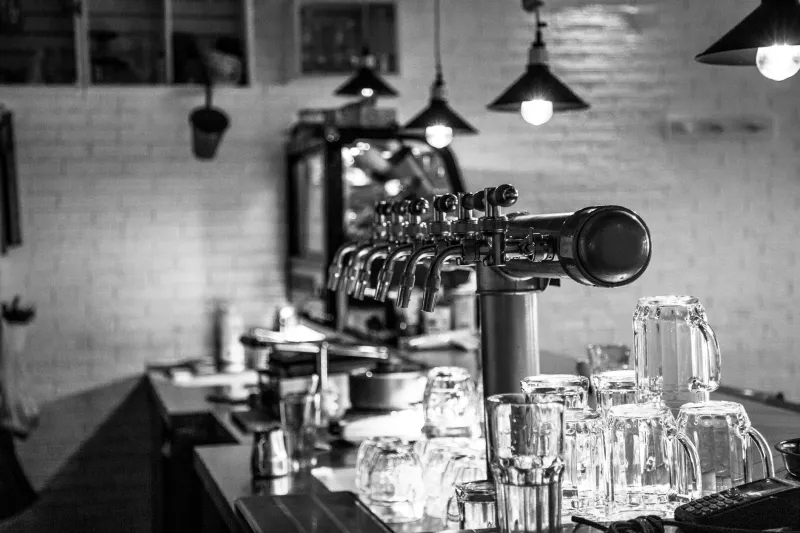
Walk behind any bar and look up. The glass shelf is the least guarded document in the building. You'll see branded nonics stacked four deep, a lonely stemmed half at the back, a row of nucleated lager glasses that have gone cloudy at the base, and — in the corner — a mismatched pile best described as 'whatever's clean'.
That pile tells you more about the pub than the menu does. A landlord who keeps forty matching glasses for the house lager and a separate set for the cask line is thinking about the beer. A landlord who pours a 4.8% best bitter into a nucleated glass built for fizz is thinking about the washing-up.
Neither is a villain. Glassware is expensive, breakages are relentless, and in 2026 every penny behind the bar is being counted twice. But the right glass is one of the few upgrades that costs pence per pint and pays you back in the first mouthful.
Branded, nucleated, stemmed: a field guide
The branded pint pot. Usually a nonic or a straight-sided tumbler, logo fired onto the side, weighty enough to survive a drop. It says the brewery cares and the pub has signed up. The downside is uniformity: a branded glass tells you the brand, not the beer.
The nucleated glass. Look for the ring of tiny laser-etched dots inside the base. Those dots give the bubbles somewhere to form, which keeps a head on a lager and stops a keg beer going flat halfway down. On cask, opinions split. Some landlords swear by nucleation for head retention; others say it knocks the condition out of a live beer and leaves it tasting sharper than it should.
The stemmed half. The connoisseur's glass, and increasingly common on the craft shelf. A stem keeps your hand off the bowl, so the beer stays cooler and the aroma stays where you can find it. A half in a stemmed glass also feels like an occasion rather than a compromise. That's worth something.
The tankard. Nostalgic, heavy, and hopeless for aroma. A pint in a tankard is a pint you drink rather than a pint you taste. Fine if that's the point.
What the same beer tastes like in three glasses
We poured a 4.2% cask pale into three vessels: a branded nonic, a nucleated straight glass, and a stemmed half. Same cask, same session, same grumpy taster.
In the branded nonic, the beer was exactly what it said on the pump clip: biscuit, a bit of citrus, a clean finish. The head fell away after ten minutes, which is normal and forgivable.
In the nucleated glass, the head sat up straighter and the lacing down the side was prettier. But the beer tasted livelier in a way that didn't quite suit it — a little spritzier, a little less soft. Good for a lager. For cask, it was a jacket that didn't fit.
In the stemmed half, the aroma arrived first: more hop, more grain, less pub. The beer warmed faster, which is the trade-off with a small measure, but every mouthful tasted more deliberate. We finished it more slowly. That's not nothing.
What landlords actually say
Maura Kennedy runs the Crown and Cushion in Stockport and switched her entire cask line to plain non-nucleated nonics two years ago. 'We were getting complaints about flat pints that weren't flat,' she says. 'It was the glass. The etch was fine for the lager, but it was murdering the bitter. We bought sixty plain glasses for about two quid each and the complaints stopped inside a month.'
Dev Patel at the Feathers in Leicester takes a different view. He keeps branded glasses for his two core lagers and generic stock for everything else. 'Breakage is the real cost,' he says. 'We lose maybe fifteen per cent a year. If I branded everything, I'd be replacing branded glass every week. Customers notice the logo, sure. But they notice a clean glass more.'
That last point is the one worth pinning to the wall. A branded glass with a lipstick smudge is worse than a plain glass rinsed properly. Presentation starts with hygiene and ends with shape, not the other way round.
The washing-up problem nobody wants to talk about
Most bad pints aren't badly poured. They're badly washed. Rinse-aid residue, detergent film, a glasswasher running on the wrong salt — all of it kills a head and leaves a beer tasting of the inside of a cupboard. A glass that smells of yesterday's vinegar will make a decent pint taste like a mistake.
If a pub gets one thing right in 2026, it should be the rinse. Cold water, clean glass, no shortcuts. Everything else is decoration.
The cheapest hospitality there is
A decent pint glass costs between two and three pounds. A pub turning over three thousand pints a week will break a few dozen a year. That's not nothing, but it's pennies per pint compared with the price of a new coffee machine or a refurbished loo.
And customers notice. They might not say it — we're British, we'd rather tut into our own sleeve — but they notice when the glass matches the beer, when the head holds, when the half comes in something that looks like it was chosen rather than grabbed. The glass is the first handshake. Get it right and the pint has a head start.
At The Glen, we'll take a plain, clean, correct glass over a branded one that's been through the dishwasher twice without a rinse. The beer deserves better, and so does the person paying for it.